Read this first: how to day trade crypto the safe way
If you feel a bit scared of day trading crypto, you’re not alone. Prices move fast, news hits overnight, and some coins can jump or crash in minutes. In 2026, crypto is bigger and more active than ever, and experts expect the market to keep growing over the next decade, which pulls in more new traders every day.[^1]
But here’s the thing: fast markets can be exciting, and also very dangerous.
This guide is for beginners who want to try day trading crypto the smart way. We’ll keep the language simple and walk through each step slowly. You’ll learn:
- What crypto day trading and short term crypto trading really mean
- How to pick a basic, beginner friendly crypto day trading platform
- Why security and scams matter more than profits at the start
- How to size trades small, use strong passwords, and protect your keys
If you’re not sure how crypto works at all, it can help to first learn what a blockchain is in plain English. That background will make day trading much easier to understand.
We’ll also touch on memecoin trading, since memes are popular with new traders. Memecoins can move very fast, which means big risk. You’ll see simple rules to avoid common traps, fake coins, and “too good to be true” offers.
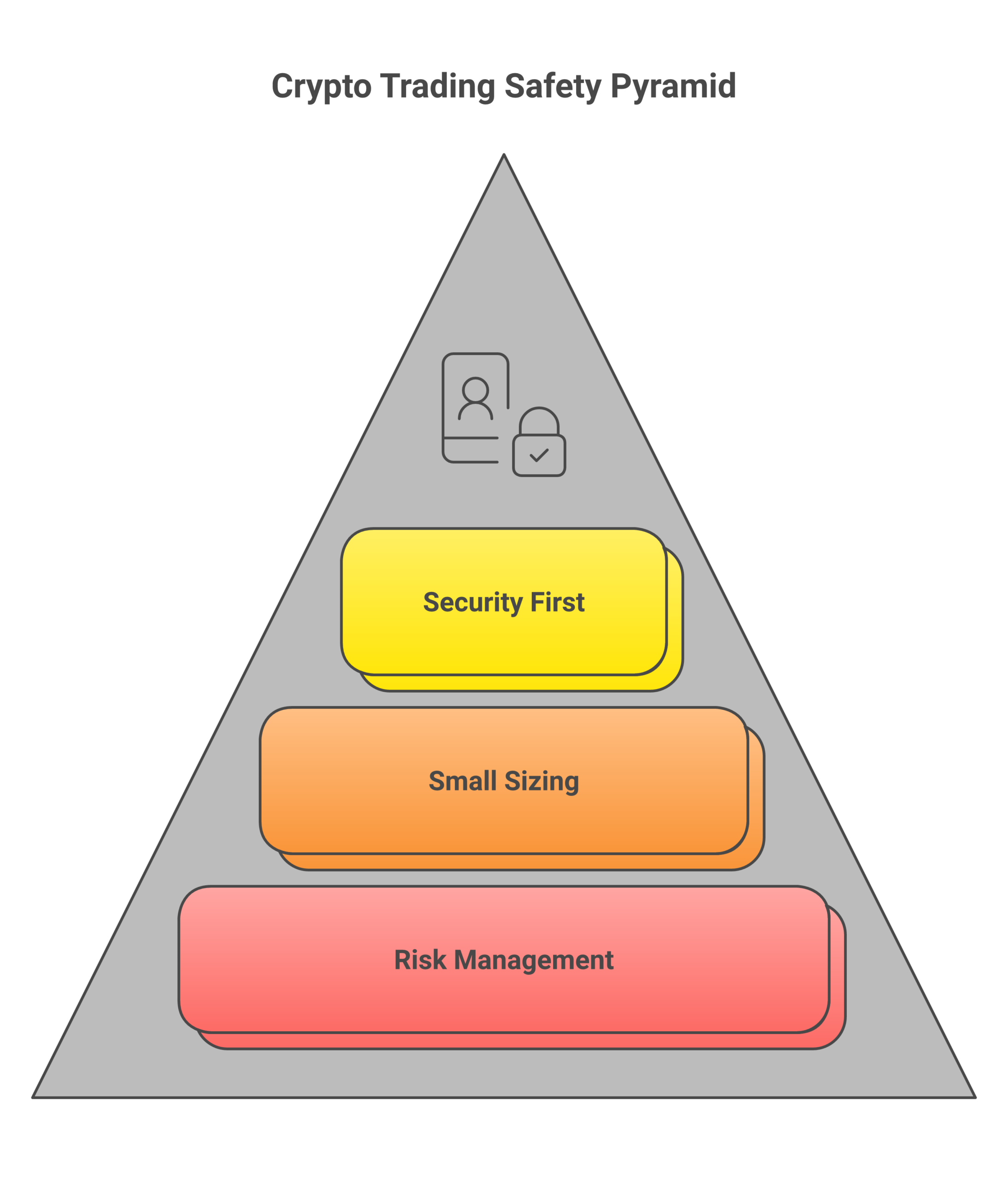
All through this guide, we’ll come back to three things:
- Risk management: never risk money you can’t afford to lose
- Small sizing: keep your trade size tiny while you learn
- Security first: protect your logins, your devices, and your wallets
In 2025 and 2026, many countries tightened crypto rules to fight scams and abuse, and that trend is still growing.[^2] That’s good for safety, but it also means you must use real, regulated platforms and follow their checks.
If you ever feel lost in the jargon, remember you can take a step back and build your base. Bitcoin Walkthrough was built to explain the basics in clear, simple lessons, from how altcoins differ from Bitcoin to how wallets and exchanges work. That way, when you start day trading crypto, you’ll understand what you are actually buying and selling.
When you’re ready for a more guided path that keeps things slow and safe, you can Sign Up for our beginner friendly program and follow each step at your own pace.
[^1]: See the recent global cryptocurrency market outlook that shows strong growth into 2026 and beyond at the Business Research Company’s cryptocurrency market report.
[^2]: For a clear overview of how crypto rules have changed across major countries, see TRM Labs’ Global Crypto Policy Review 2025/26.
What is crypto day trading? Basics and real risks
Think about watching a price chart on your phone. The number keeps going up and down all day.

Day trading crypto means you try to buy low and sell high inside that same day, to catch those small, fast moves.
You open a trade, then close it before the day ends. Sometimes in minutes, sometimes in a few hours. You are not trying to hold for months or years. You are trying to ride short term waves.
In 2026, crypto prices can still move a lot in a short time, and that high volatility is a big part of why day trading crypto feels exciting and scary at the same time.[^v1]
How day trading differs from other styles
It helps to see how crypto day trading is not the same as other ways to trade or invest.
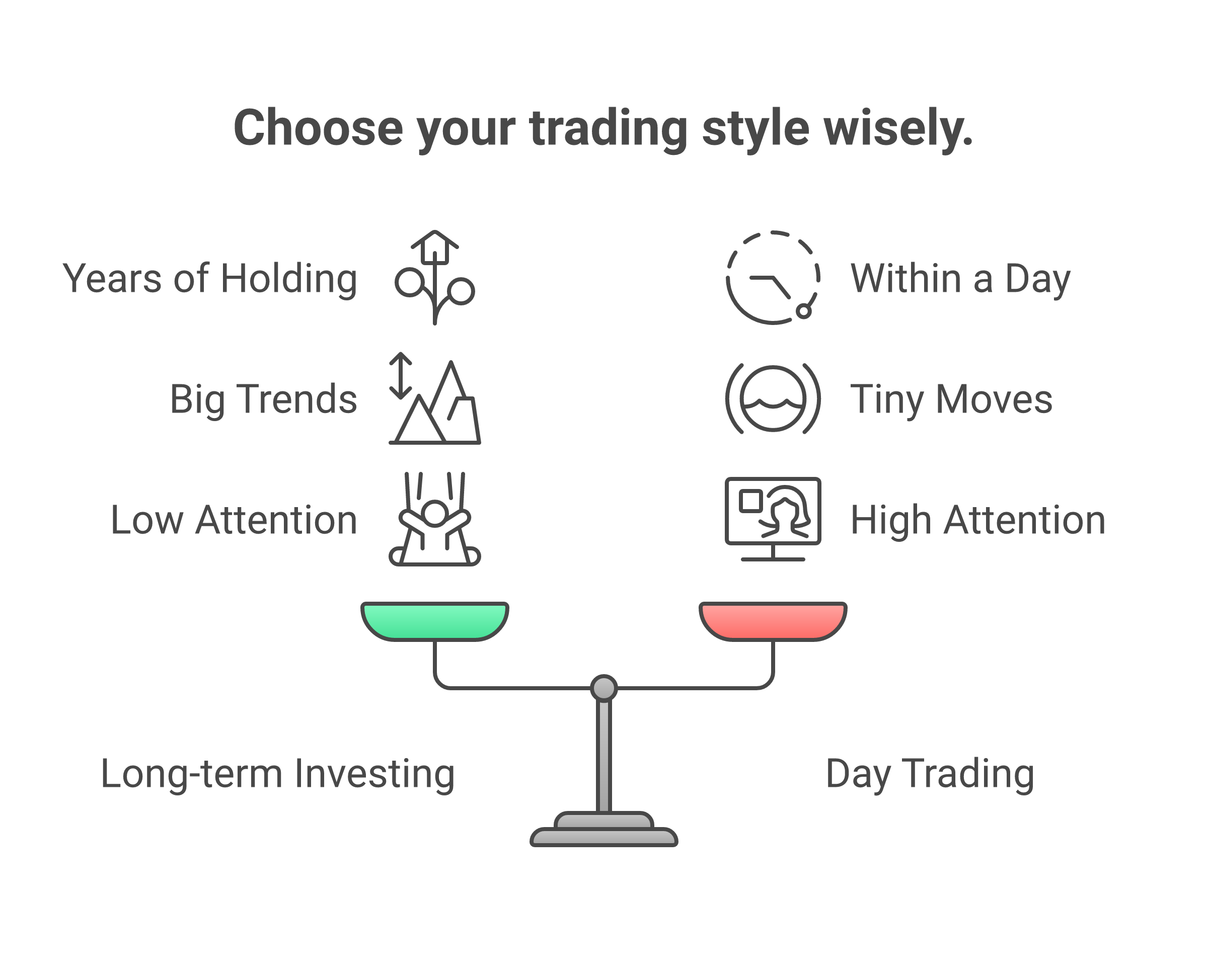
1. Long term investing
- You buy a coin and plan to hold for years
- You care about big trends, like how crypto moves into the mainstream
- You check prices sometimes, not all day
Many long term investors spend time learning the tech first, like how altcoins differ from Bitcoin, before they think about fast trading.
2. Swing trading
- You hold for days or weeks
- You try to catch a “swing” in price, like a clear move up or down
- You may ignore tiny moves inside each day
3. Day trading crypto
- You open and close trades within the same day
- You might place many trades in one session
- You care a lot about fees, speed, and tiny price changes
Short term crypto trading, like day trading and memecoin trading, is more about quick decisions and strict rules. Long term investing is more about patience and slow growth.
Where day trades happen: spot, margin, and futures
On a crypto day trading platform, you will see different markets. The names can feel confusing, so let’s keep them very simple.
Spot markets
- You use your own money
- You buy real coins (like BTC, ETH, or altcoins)
- You can sell them back later for cash or a stablecoin
Spot trading is where beginners should start. It is the most basic way to trade. You use what you have, you do not borrow or “boost” your size.
If you are still learning what exchanges do, it can help to read guides like what Coinbase is and which product beginners should use. That kind of base knowledge makes your first spot trades much safer.
Margin trading
- The platform lets you borrow money to make a bigger trade
- This is called leverage
- If the price moves against you, you can lose your own money very fast
Perpetual futures
- You trade contracts about price, not the coins themselves
- You can bet on price going up (long) or down (short)
- Leverage is common here, and risk is very high
For beginners, margin and perpetual futures are usually a trap. The same leverage that can double a win can also erase your account in minutes if the price swings the wrong way. Even pros get liquidated in wild markets.
Until you are skilled and calm under pressure, it is safer to avoid leverage completely and stay in simple spot markets.
Volatility cuts both ways
Crypto is famous for big moves. In some coins, a 10 percent move in one day is normal. In sharp times, memecoin trading can see swings of 50 percent or more in a few hours.
That volatility can help you:
- Catch quick gains on a strong move
- Get in and out of trades faster than in some stocks or bonds
But it can also hurt you:
- Prices can drop hard right after you buy
- A coin can “pump” then crash before you react
- News can hit while you are in a trade, and move the whole market
This double edged nature of volatility is one reason experts still call crypto a high risk asset class, even as it becomes more mainstream.[^v2]
Why protective orders and small size matter
Because prices move fast, you need two safety tools in your day trading plan:
-
Small position size
- Start tiny, like 1 to 5 percent of the money you set aside for trading
- A small loss is easy to live with and helps you keep learning
- If you feel scared to lose the trade, your size is too big
-
Protective orders
On most platforms you can set:
- Stop loss orders to close a trade if the price falls to a level you choose
- Take profit orders to lock in gains if the price reaches your target
These tools will not remove risk, but they can stop one bad trade from turning into a huge, account killing loss. They are extra important in short term crypto trading, where you may be placing many trades in one day.
A quick word on safety before you go deeper
Day trading crypto is not just about charts. It is also about:
- Using real, regulated platforms in your country
- Understanding how your keys work, so you can protect your coins
If you have not yet learned how public and private keys control access to your funds, take a break and read about what private keys and public keys really mean. That single lesson can save you from some of the worst mistakes new traders make.
If you want a slow, clear path that keeps safety first while you learn all this, you can Sign Up for the Bitcoin Walkthrough beginner program. It walks you step by step from “no clue” to “confident first trades” without rushing you into risky leverage or complex products.
[^v1]: For example, recent market research shows the crypto market has grown quickly in size, with prices marked by sharp moves and strong volatility as it expands into 2026, as noted in the Business Research Company’s cryptocurrency market report.
[^v2]: One large asset manager highlighted how heavy price swings and changing market share are still key features of major coins, in its review on how cryptocurrencies break into the mainstream.
Is day trading right for you? A quick self‑check and safer alternatives
Picture this. Your phone keeps buzzing. Prices jump. Then drop. Your heart races.
Some people love that feeling. Some people hate it.
Before you dive into day trading crypto, take this quick self check.
1. Time: do you really have enough?
Day trading is not “set it and forget it.” It needs:
- Time to watch charts during the day
- Time to plan trades before you enter
- Time after, to review what went well and what went wrong
If you can only look at your phone a few times between school, work, or family, short term crypto trading will feel like a rush and a guess, not a plan.
In 2026, crypto prices can move fast as the market grows and more money flows in, which makes focus and screen time even more important.The Business Research Company notes that the crypto market is still growing quickly in size and activity.
Ask yourself:
“Can I give at least a few calm hours to trading, without hiding at work or rushing at red lights?”
If the honest answer is no, day trading crypto may not fit your life.
2. Emotions: can you stay calm?
Day trading is a stress test for your mind.
You will see:
- Fast wins
- Fast losses
- Big moves in memecoin trading that can flip in minutes
You need to be able to:
- Take a loss without revenge trading
- Take a win without getting greedy
- Follow your rules even when you feel fear or FOMO
Red flag signs:
- You move your stop loss “just this once”
- You double your size after a loss to “get it back”
- You cannot sleep because of an open trade
If this sounds like you, it is wiser to slow down and learn first. Reading basics like what a blockchain is in plain English can build calm, steady understanding before you add fast trading on top.
3. Money: can you afford to lose it?
This part is simple, but hard to accept.
Only trade with money you can fully lose without:
- Missing rent
- Delaying bills
- Skipping food or medicine
Day trading is not a fix for debt. It is not a shortcut to pay off loans.
A good rule many traders use:
- Start with a small “learning pot”
- Risk only 1 to 5 percent of that pot per trade
- Be ready for that whole pot to go to zero while you learn
If that idea makes you feel sick, then day trading crypto is too risky for your current budget.
4. Expectations: are you chasing a dream?
Social media makes it look like everyone is getting rich from crypto day trading. In real life, many active traders lose money, especially when they start. Big players, fast bots, and news you cannot control all affect the market.Large asset managers still warn that heavy volatility and sharp swings are normal in crypto, even as it goes mainstream.
Healthy expectations look like this:
- “I want to learn a skill over months and years”
- “My first goal is not to blow up my account”
- “Small, steady growth is fine”
Unhealthy expectations sound like:
- “I will quit my job this year from day trading”
- “One big win will change my life”
- “I will 10x my money in a month”
If your hopes are closer to the second list, pause. Reset. Day trading works better when you think like a student, not like a lottery player.
Safer alternatives if day trading feels too intense
If this self check shows that crypto day trading is not a good fit right now, that is okay. You still have smart ways to be in crypto.
1. Learn the basics first
Before you risk money in a crypto day trading platform, build a strong base:
- Understand what Bitcoin is and how it works
- Learn how transactions show up in a Bitcoin block explorer
- Know how wallets, public keys, and private keys keep your coins safe
This kind of slow, clear learning makes every future choice safer, whether you choose day trading or long term investing later.
2. Dollar cost averaging and long term holding
If fast intraday moves feel too stressful, you can:
- Buy a small fixed amount of Bitcoin or a major coin on a set schedule
- Hold for years, not hours
- Ignore tiny daily swings and focus on big trends
This is called dollar cost averaging. It is simple, and it removes the need to “time the market” each day.
Long term investors often spend more time learning things like how altcoins differ from Bitcoin instead of staring at 1 minute charts. That slower path can still benefit from the overall growth of crypto without the stress of day trades.
3. Practice with paper trading
If you still feel curious about day trading crypto, start with paper trading:
- You “trade” with fake money
- You use real charts, real prices, real rules
- You track wins and losses in a notebook or app
Paper trading lets you:
- Test your strategy
- See how often you follow your own rules
- Feel how fast markets move, without risking rent money
Treat it like real money. Only then will you see if your plan and your emotions are ready for live short term crypto trading.
If you want a safer way to start
If this self check showed that you need more base knowledge before real trades, you do not have to figure it out alone. Bitcoin Walkthrough was built for total beginners who feel lost in crypto talk. It walks you through key ideas like exchanges, wallets, and safety, step by step, in clear language.
If you want a calm, guided way to get ready for any kind of crypto activity, from long term holding to careful trading, you can Sign Up for the Bitcoin Walkthrough beginner program and start building real skills before you risk real money.
How to choose a reputable crypto exchange for day trading (2026)
If you want to try day trading crypto, your exchange is your “home base.”
Pick a bad one, and even a good trade can end in a mess. Pick a strong one, and short term crypto trading gets a lot safer and smoother.
Let’s walk through what to look for in 2026, step by step.
1. Safety first: how to check if an exchange is serious
In 2026, rules for crypto are getting tighter in many places. Governments are pushing exchanges to get clear licenses and follow real money laws, not just “move fast and break things.” Guides for crypto businesses now talk about money service licenses, state money transmitter rules, and other strict checks for firms that touch customer funds.A detailed 2026 overview of U.S. blockchain and cryptocurrency laws shows how closely regulators now watch trading platforms.
You are not a lawyer, and you do not need to be. Here is what you can do in plain language.
Look for:
-
Licensing or registration in your region
Go to the exchange website and scroll to the footer.
Things to check:- Do they name the company behind the brand?
- Do they list licenses, such as “registered as a virtual asset service provider” or “money services business”?
- Can you find that company in your local regulator’s public list?
If they hide where they are based, or give only a P.O. box, that is a warning sign.
-
Proof of reserves reports
Many safer exchanges now publish “proof of reserves.” This is a way to show that they hold enough coins to cover user balances.
Look for:- A clear “Proof of Reserves” or “Asset Transparency” page
- Simple charts that show how much Bitcoin and other coins they hold
- An outside auditor or firm that checks the numbers
If they never talk about reserves at all, be extra careful.
-
Strong security measures
Good exchanges usually offer:- Two factor login (for example, app based codes)
- Email alerts for new devices or withdrawals
- The option to whitelist withdrawal addresses
- Info about how much they keep in offline “cold storage”
If you do not yet feel clear on how keys and wallets work, take time to learn what private keys and public keys really mean before you keep large amounts on any exchange.
-
Transparent incident reporting
No system is perfect. What matters is how they act when something goes wrong.
Search the exchange name plus words like “hack” or “outage.” Then ask:- Did they post open updates to users?
- Did they explain what happened and how they fixed it?
- Did they change any rules or tools after the issue?
If you feel lost or see only hype and memes, do not send money there. Safety comes first, especially if you plan fast crypto day trading with real funds.
2. Practical features that help beginners day trade
Once a platform passes your basic safety test, look at how it will feel to use every day. For day trading crypto, small frictions add up. You want tools that are simple, clear, and stable.
Key things to check:
-
Clear fee schedule
Day traders pay many small fees, so costs matter.
Make sure:- There is an easy to read fee page
- It explains maker and taker fees in simple numbers
- It lists deposit and withdrawal fees for both fiat and crypto
If you cannot figure out what you will pay per trade, that is a problem.
-
Deep liquidity in major pairs
For short term crypto trading, especially in big coins, you want enough buyers and sellers. This keeps spreads tight and helps orders fill near your target price.
Look at:- Trading volume for pairs like BTC/USD, BTC/USDT, and ETH/USDT
- Order book depth for the coins you plan to trade
For memecoin trading, understand that liquidity can vanish fast. Even on a solid crypto day trading platform, small meme coins can move in wild jumps, so always size trades small.
-
Reliable mobile and desktop apps
Since prices can change in seconds, your app cannot freeze all the time.
Before you fund your account:- Install the mobile app and click around
- Try the web or desktop version on your main computer
- Check app store reviews for recent comments on bugs or outages
-
Simple, clear order tickets
As a beginner, you want orders that are easy to understand. Look for:- Clear options for market, limit, and stop orders
- A preview screen that shows your total cost and fees
- Simple ways to set stop loss and take profit in one place
If the order screen confuses you, it will be even worse when you feel stress in a live trade.
-
Responsive customer support
When money is stuck in a deposit or a withdrawal is slow, you do not want silence.
Check:- Do they offer live chat or only email?
- Is support 24/7 or only some hours?
- How fast do they reply to test questions before you send large amounts?
If all of this still feels like a lot to judge on your own, a guided course like Bitcoin Walkthrough can help you understand what Coinbase is and which product beginners should use, so you see real examples of how a large exchange works.
3. Operational basics: will this exchange fit your daily flow?
You can pick a safe and easy platform yet still struggle if it does not match your money life. Think about how you will move funds in and out during normal days.
Funding and withdrawals
Ask yourself:
- Can you deposit with your main bank, card, or local payment method?
- Are there clear withdrawal limits for both fiat and crypto?
- Do those limits match your planned trade size, or will you feel stuck?
Small daily traders might be fine with low limits. If you plan to move larger sums over time, higher limits and fast processing matter.
Assets you can actually trade
Not all exchanges list the same coins. Check:
- Does the platform support the main coins you want for crypto day trading, like BTC and ETH?
- If you like altcoins and memecoins, which ones are listed, and how active are their markets?
It can help to review how altcoins differ from Bitcoin before you jump into thin markets that swing wildly.
Order types that match your plan
Even simple day trading plans need certain order types. At minimum, a serious exchange for day trading crypto should support:
- Market orders, to enter or exit fast
- Limit orders, to set your own price
- Stop loss orders, to cap your risk
As you grow, you might want advanced tools like OCO (one cancels the other) or trailing stops, but you can start with the basics. Just make sure the platform offers what your written plan uses.
4. Putting it together without feeling overwhelmed
It is normal to feel unsure at this point. You are trying to:
- Understand rules and licenses
- Judge safety and reserves
- Compare fees, apps, and liquidity
- Check coins, limits, and order types
You do not have to master all of this in a weekend.
If you want calm, step by step help choosing your first exchange and learning how to use it safely, you can join the Bitcoin Walkthrough beginner program. It walks you through accounts, wallets, and first trades in plain English, so you are not guessing with real money.
When you feel ready to learn with support, you can Sign Up and start building smart habits before you place your first crypto day trade.
Account setup step by step: KYC, 2FA, funding, and withdrawal allowlists
Once you pick a crypto day trading platform, your next job is to set it up safely. Take this slow.
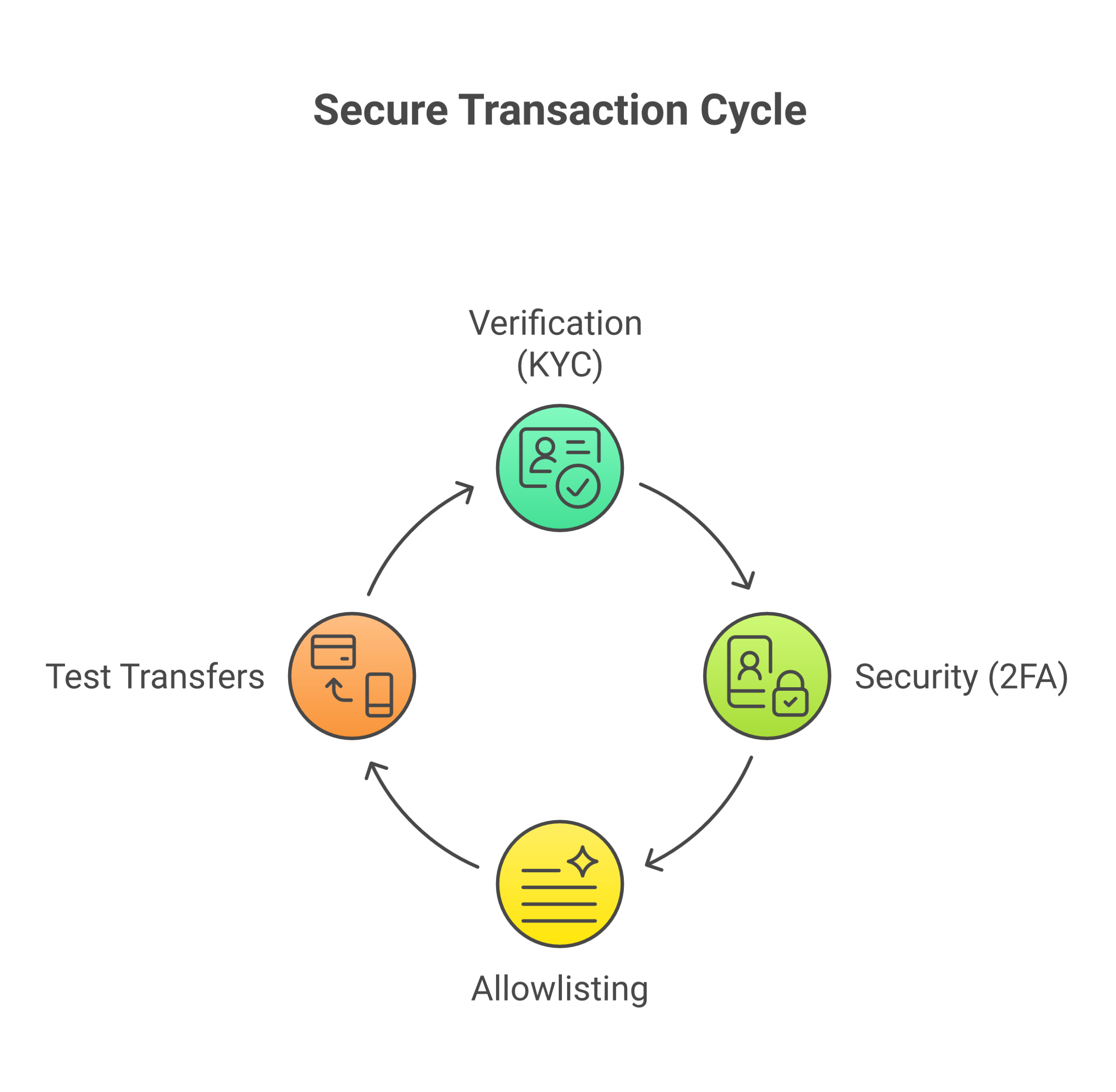
A few careful steps now can save you from big pain later.
Regulators in 2026 push exchanges to follow strict “know your customer” rules and other money laws, so real platforms will ask for ID checks before you trade or move funds.Modern crypto licensing guides explain how serious KYC and compliance checks are for any legal exchange.
1. Verification (KYC): lock down your account first
Before you send even one dollar:
-
Secure your email
- Turn on strong passwords, not reused ones
- Add two step login to your email if you can
-
Secure your phone
- Use a screen lock
- Turn off easy SIM swaps with your phone company if that is an option
-
Complete KYC on the exchange
- Fill in your real name, address, and date of birth
- Upload clear photos of your ID and, if asked, a selfie
- Wait for approval before you send money
If you ever feel unsure why these checks matter, learning what a blockchain is in plain English can help you see why regulators care so much about tracking money flows.
2. Security musts: 2FA, apps, and withdrawal allowlists
For day trading crypto, your login and withdrawals are your “front door.”
Do this next:
-
Turn on app based 2FA
- Use an authenticator app, not just SMS
- Write down backup codes and store them offline
-
Consider a hardware security key
- If your exchange supports it, this adds an extra physical step
- Keep the key in a safe place, not on your main keychain
-
Check your app downloads
- Only install apps from the official site link
- Double check the logo, name, and reviews
- Avoid search ads that may be fake copies
-
Set a withdrawal allowlist
- Add only your own wallet addresses
- Turn on the rule that blocks sends to new addresses for a set time
- Use email or 2FA approval for any changes
To understand why these steps matter so much, it helps to learn what private keys and public keys really mean so you see how a stolen key can empty an account.
3. Funding smartly: test deposits and test withdrawals
Now you are ready to move a small amount. Not your full stack.
-
Start tiny
- Send a small amount of fiat or crypto first
- Wait until it fully lands and shows as “available”
-
Do a small test trade
- Buy a little BTC or ETH
- Watch how fees and fills work for short term crypto trading
-
Do a small test withdrawal
- Copy your wallet address carefully
- Send a small test amount out of the exchange
- Confirm it arrives in your wallet
If you want extra comfort before moving larger sums for crypto day trading or even memecoin trading, Bitcoin Walkthrough’s beginner program shows these steps on real screens and explains how to double check things like addresses and explorers. When you are ready to learn this with calm, clear guidance, you can Sign Up and practice with small, safe amounts before scaling up your day trading crypto size.
Order types and tools you’ll actually use: market, limit, stop, and OCO
You picked a crypto day trading platform and set it up safely. Now comes the part that can feel scary. Pushing the “buy” and “sell” buttons.
If you do not understand order types, day trading crypto can feel random. Prices move fast, and one wrong click can give you a bad fill or a big loss. Let’s keep it simple and stick to the core tools you’ll actually use.
Market vs. limit: how you really get filled
Most of your crypto day trading will start with just two buttons:
- Market order
- Limit order
They sound small, but they control how you enter and exit a trade.
Modern guides on common crypto order types explain that market and limit orders are the base that everything else builds on.
Market order: “get me in or out now”
A market order tells the exchange:
“Fill my order right now at the best price you can find.”
- It fills fast
- You accept whatever price the market has at that second
- You can get slippage, which means you pay a bit more or sell a bit lower than the last price you saw
Market orders can make sense when:
- The amount is small
- The coin is very liquid (like BTC or ETH)
- You just want to exit quickly, for example if a memecoin trade is going against you
For short term crypto trading, use market orders only when speed matters more than exact price.
Limit order: “only at this price or better”
A limit order tells the exchange:
“Fill my order only if you can give me this price or better.”
You choose a limit price. The order:
- May sit in the order book until the market reaches your price
- Gives you better control over slippage
- Can fail to fill if the price never reaches your level
Limit orders fit well when:
- You have a clear entry price
- You are not in a rush
- You are trading coins that move fast, like altcoins or memecoins
If you are still learning how crypto prices move, it can help to step back and read about what altcoins are and how they differ from Bitcoin. This makes it easier to see why some coins need stricter limit use than others.
Protective orders: stop, stop limit, and OCO
Market and limit are how you enter. Stops and OCO are how you protect yourself when day trading crypto.
A detailed guide on trading order types lists market, limit, stop loss, stop limit, trailing stop, and one cancels the other as the core tools. You do not need them all at once, but you must know the basics.
Stop loss: cut the loss fast
A stop loss is an order that triggers if price hits a level you pick.
Simple version:
- You are long (you bought a coin)
- You set a stop below your entry
- If price falls to that level, your stop sends a market order to exit
This helps you avoid “I will just wait, maybe it bounces” thinking.
Stop limit: more control, more risk
A stop limit order is a bit stricter:
- You choose a stop price that triggers the order
- You choose a limit price where you are willing to sell or buy
When the stop hits, the system places a limit order, not a market order. This gives you more control over price, but in a very fast drop your limit might not fill at all. For new traders, that extra risk can be tricky. Many beginners are better starting with simple stop loss orders, then moving to stop limit once they understand how fills work in real time.
To see how stops fit into fast markets like futures or leverage trading, you can read about how market, limit, and stop orders shape your strategy.
OCO: one order cancels the other
OCO means one cancels the other.
It links two orders:
- A take profit order above price
- A stop loss order below price
When one fills, the other one cancels. This helps you:
- Lock in a target
- Protect your downside
- Avoid babysitting every single crypto day trading position
Example:
- You buy at 100
- You set a take profit limit at 110
- You set a stop loss at 95
- If price hits 110, you exit with profit and the stop at 95 is canceled
- If price drops to 95, the stop hits and the 110 target is canceled
For busy people, OCO can be a lifesaver, since it automates exits while you work or sleep.
Core screen tools: reading the flow, not telling the future
Order types tell the system what to do. Screen tools help you decide when to do it.
You will see many fancy widgets, but for simple crypto day trading and memecoin trading, you mostly need:
- Order book
- Depth chart
- Time and sales
- A few basic indicators
Traders in both stocks and crypto use these tools to match order types to the market they are in, for example by choosing speed or price control based on conditions.Order type guides for stocks and ETFs show that this tradeoff is the same across markets.
Order book
The order book shows all open limit orders:
- Bids (people willing to buy, with their prices and sizes)
- Asks (people willing to sell, with their prices and sizes)
You can use it to:
- Avoid placing a big market order into a thin book
- Pick limit prices near strong clusters of bids or asks
Depth chart
The depth chart turns the book into a picture.
- One curve for buy orders
- One curve for sell orders
It helps you see where large walls of orders sit. If a price level has a big buy wall, you might place your limit just above it if you want to get filled before others.
Time and sales
This stream shows actual trades that just happened:
- Price
- Size
- Time
You can glance here to see if the current flow is mostly buying or selling. It is not magic. It just gives you a feel for speed and pressure.
Basic indicators
For beginners, keep indicators very light, for example:
- Simple moving averages
- Volume bars
- Maybe one momentum tool like RSI
Use them for context, not for prediction. They are just helpers, not fortune tellers.
If this still feels like a lot, that is normal. Many complete beginners like to learn on guided videos and checklists first, then try real orders with tiny size. Bitcoin Walkthrough is built exactly for that style. You can walk through real screens, practice market and limit orders, and see how block explorers confirm your trades. When you want that kind of calm, step by step support, you can Sign Up and learn the skills you need before you scale up any day trading crypto plan.
Beginner-friendly day trading setups (with rules you can practice)
You now know how to place market, limit, and stop orders. The next step in day trading crypto is to give those orders a simple plan.
Not a fancy system. Just a few clear setups with rules you can repeat.
In 2026, most active traders still build around basic order types like market, limit, and stop loss, then add rules that fit different market conditions, such as breakouts or pullbacks.Modern guides to trading order types show that these simple tools are still the core.
We will walk through two starter setups and clear times when you should not trade at all.
Setup 1: Breakout basics you can see with your eyes
A breakout trade is when price moves out of a clear “box” it sat in for a while.
Think:
- Price moves up and down in a tight range
- You draw a simple top line and bottom line
- When price breaks the top, you look to buy
This can work for both Bitcoin and altcoins, and even for memecoin trading, as long as the chart is not just random spikes. If you are not sure how different coins move, it helps to review what altcoins are and how they differ from Bitcoin. Coins that move faster often need tighter rules.
Here is a simple breakout plan you can practice.
Step 1: Trade only clear consolidations
Skip messy charts. You want:
- At least 3 bounces off the top line
- At least 3 bounces off the bottom line
- Candles mostly inside one tight zone
If you have to “guess” where the box is, skip it. Clear or nothing.
Step 2: Define your entry and invalidation
Before you press buy, write down:
-
Entry
- Buy only if price closes above the top of the box
- Use a limit order a tiny bit above the breakout level so you do not chase too high
-
Invalidation
- Your trade idea is “wrong” if price falls back into the box and stays there
- Set your stop loss just inside the box, not right on the top line, to allow normal noise
This keeps you from moving your stop “just this once”.
Step 3: Pre-set your stop and target
Most new traders get hurt when they enter first, then “think about” exits later. Do the reverse.
Before entry, decide:
-
Stop loss
- Set with a stop market order so you are sure you get out if the breakout fails
- For example, 1 to 2 percent inside the box
-
Take profit
- Aim for at least 2 times your risk
- If risk is 1 percent, target at least 2 percent gain
You can use an OCO order to place both stop and target at once so one cancels when the other hits. Many modern platforms let you build this with the same basic order tools you already know.Beginner guides to common crypto order types show how market, limit, and stop can mix to form these simple plans.
Setup 2: “Mean reversion lite” inside a calm range
Now let us flip the idea.
Instead of trading the breakout out of the box, you trade inside the box. You buy near the bottom and sell near the top. This style is called mean reversion in simple form.
For beginners, keep this version very light and simple.
Step 1: Use known ranges, not random swings
Pick coins that:
- Have a clear top and bottom from recent days
- Are not in the middle of a huge news spike
- Show steady back and forth moves inside the range
Draw your top and bottom lines. If price is in the middle of the box, you do nothing.
Step 2: Wait for overextension into the edges
You only trade when price stretches into the outer part of the range:
-
Near the bottom
- Look for price to dip close to the lower line
- You plan to buy, expecting price to move back toward the middle of the box
-
Near the top
- Look for price to rise close to the upper line
- You plan to sell if you already hold, or even short if your plan and platform allow it
Again, if price is in the middle, you sit on your hands.
Step 3: Make volatility match your plan
Your risk should feel boring, not scary.
- Use smaller size on wild coins, such as thin memecoins
- Use wider stops only if your account can handle that risk
- Skip a coin completely if one candle can wipe out your planned stop
In 2026, many traders use simple rule based tools and even basic algorithmic orders to help keep execution steady,modern overviews of algorithmic orders explain that even bots still follow clear rules about range, volatility, and risk. You are doing the same thing here, just by hand.
A basic mean reversion plan might look like this:
- Buy near the bottom of the box
- Stop loss a bit below the box
- Take profit in the middle or near the top of the box
Again, pre set both stop and target before you enter the trade.
When you should not trade at all
Good crypto day trading is not only about entries. It is also about knowing when not to click.
Here are simple times to stay flat.
1. Major news or events
Skip trading right before or right after:
- Big economic news
- Major exchange listings or delistings
- Big legal or policy updates for crypto
Volatility can jump fast, spreads can widen, and your stops can slip. Professional traders accept this, since order types are just tools that behave differently in fast markets and calm markets.Guides on how order types respond in different conditions show that speed and price control always trade off.
2. Thin liquidity
Avoid coins where:
- The order book has big gaps between prices
- Your normal position size would eat through the book
- One market order moves the price a lot
This is very common in small memecoins. Thin liquidity can turn even a small market order into a big loss.
3. Choppy, “no edge” ranges
If the chart:
- Has no clean trend
- Has no clear range
- Shows sharp wicks both up and down
Then your edge is not clear. You are just guessing. Close the chart and come back later.
How to practice these setups safely
You do not need to risk much to learn how day trading crypto works.
You can:
- Use tiny size on a live account
- Save screenshots of each trade with entry, stop, and target
- Review at the end of the week to see if you followed your rules
If the basics of Bitcoin, wallets, and block explorers still feel fuzzy, it is smart to fix that first so you understand what you are really trading. Bitcoin Walkthrough has step by step guides on things like what private keys and public keys really mean and how to handle the practical side without fear.
If you want a calm, structured path instead of guessing on YouTube, you can use Bitcoin Walkthrough’s guided program to learn the essentials and then layer simple trading setups on top. When you are ready to start that step by step journey, you can Sign Up and move through each lesson at your own pace, before you put real money at risk with any day trading crypto plan.
Risk management 101: stop losses, position sizing, and risk / reward
When people think about day trading crypto, they often dream about gains. The quiet truth is that risk management is what keeps you in the game long enough to learn.
In 2026, crypto is bigger and more accepted, but it is still very volatile.Recent market reports show fast growth and sharp price swings. That is why risk rules matter more than your next hot memecoin trading idea.
Let us keep this simple.
1. Stop losses: where your idea is wrong
A stop loss is a line in the sand.
It is not where you hope price will bounce. It is where your trade idea is clearly wrong.
For each trade:
- Ask, “Where does this setup stop making sense?”
- Put your stop beyond that level, not right on it
- For breakouts, that might be back inside the box
- For mean reversion, that might be outside the range
If price hits that stop, you exit. No debate. No “just this once.”
Stops protect your trading capital so one bad move does not ruin your whole account.
2. Position sizing: how big is “safe enough”
Position size is how much you buy or sell on a trade.
Two traders can use the same setup, but if one risks half their account and the other risks 1 percent, their futures look very different.
A simple rule for short term crypto trading:
- Pick a small risk per trade, like 0.5 to 1 percent of your account
- Measure the distance from your entry to your stop loss
- Adjust your position size so that if the stop hits, you only lose that small percent
Wild coins, like some altcoins that move faster than Bitcoin, may need smaller position size. If you are not sure how different coins move yet, review what altcoins are and how they differ from Bitcoin so you do not size a memecoin like a slow blue chip.
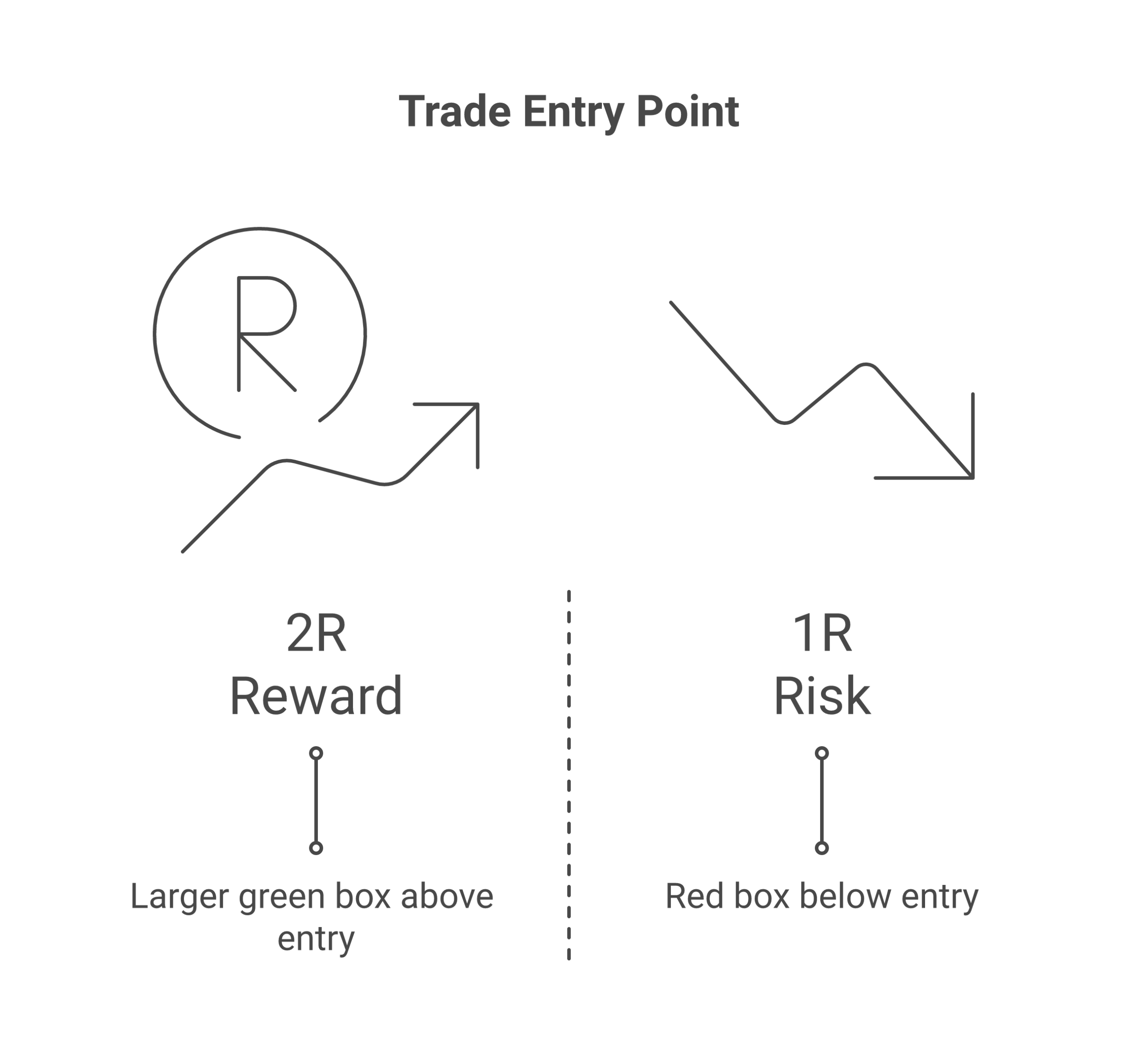
3. Risk / reward: think in bets, not predictions
You cannot control where price goes. You can control what you do if it gets there.
Risk / reward (R:R) means:
- Your risk is the amount from entry to stop
- Your reward is the amount from entry to target
- You want trades where reward is bigger than risk
For example:
- Risk 1 percent of your account
- Aim for at least 2 percent gain
- That is a 2 to 1 R:R
If your setups often give you 2 to 1 or better, you can be wrong many times and still come out ahead, as long as you keep your risk per trade small and steady.
Put it together: a simple daily checklist
Before any crypto day trading session, ask:
- Where is my stop for this idea?
- How big can my position be so that loss is small and boring?
- Is my target at least 2 times my risk?
- If not, should I skip this trade?
As crypto grows and more rules, laws, and big players enter the space,global policy reviews show that volatility and regulation can both change fast. A calm, rule based risk plan keeps you from reacting out of fear.
If you feel shaky on the basics of Bitcoin, wallets, and platforms like Coinbase, it helps to build that foundation before you push size on any crypto day trading platform. Bitcoin Walkthrough has beginner guides on things like what is Coinbase and which product beginners should use so your first steps with real money feel safer.
When you are ready to follow a clear, step by step path that puts safety first and trading tricks second, you can use Bitcoin Walkthrough’s guided program. It walks you from zero knowledge to confident first steps, so your risk rules have a solid base. To start that journey today, Sign Up and learn the core skills before you scale any day trading crypto plan.
Costs, taxes, and record keeping (do not skip this)
When you think about day trading crypto, fees and taxes may feel boring. But they can eat your wins fast, especially with short term crypto trading.
Let us walk through what really matters.
1. Know your trading costs
Every crypto day trading platform has costs. If you ignore them, your memecoin trading edge can vanish.
Key costs to watch:
- Maker / taker fees
- Maker orders sit on the book and often pay lower fees
- Taker orders fill right away and often cost more
- Spread
- The gap between the best buy and sell price
- On thin altcoins, this gap can be big and act like an extra hidden fee
- Funding rates for derivatives
- If you trade futures or perpetuals, you may pay or earn a funding fee every few hours
- High funding over time can turn a good trade into a bad one
Before you start crypto day trading on any new platform, test with tiny size first. Track how much you pay in fees for a normal trade so you know what your real break even is.
2. Taxes in 2026: every move can count
In 2026, many countries treat crypto as property or a digital asset, which means that selling, trading, or spending it can trigger tax.Guardarian’s 2026 crypto tax guide explains that each sale or swap may be a taxable event in many places.
Common taxable events can include:
- Selling Bitcoin or an altcoin for your local currency
- Swapping one coin for another on an exchange
- Using crypto to pay for goods or services
- Some kinds of staking, rewards, and airdrops, depending on rules in your country
Rules differ by country, and global tax guidance keeps changing as reporting rules grow tighter.PwC’s overview of global crypto tax developments in 2026 notes that tax offices share more data and see more crypto activity now.
So for day trading crypto:
- Do not assume “It is just online, they will not see it”
- Do not wait until tax time to sort a whole year of trades
- Do talk to a local tax pro if you are unsure
If you are still learning how Bitcoin works under the hood, it can help to first read a plain guide like what is a blockchain, a plain English definition. When you know what is really moving, the tax rules feel less random.
3. Records you must keep
Good records protect you. They make tax time less scary and help you see if your crypto day trading plan is actually working.
Make a simple record system that tracks:
- Trade history CSV files
- Download from each exchange often
- Save both spot and derivatives history
- Account statements
- Monthly or quarterly PDFs from your platform
- Notes on cost basis
- How much you paid for each coin, in your local money
- Date, time, and fees for each entry and exit
- Secure backups
- Store copies on an encrypted drive or secure cloud
- Keep logins, 2FA backups, and any tax notes in a safe spot
If you ever move between platforms, knowing your cost basis is vital. That record tells you your true profit or loss, not just what the app screen shows.
Keeping clean records also forces you to slow down. You think more clearly about each trade instead of just chasing the next pump.
If this whole world still feels confusing, you do not have to figure it out alone. Bitcoin Walkthrough’s step by step program teaches basics like exchanges, wallets, and smart habits before you risk real size. To start building safe skills now, Sign Up and follow a guided path instead of guessing your way through day trading crypto.
Security musts and scam red flags for day traders
When you are day trading crypto, speed feels fun. But moving fast with weak security is like racing a car with no seat belt. One mistake, and your memecoin trading stack can be gone.
In 2026, crypto crime is huge. Reports show that scammers stole many billions of dollars in recent years, and losses from crypto fraud and hacks are still high as new tricks spread online.The 2026 crypto crime reports warn that attacks keep getting smarter, not weaker.
Let us keep your coins on your side.
1. Lock down your devices and accounts
Your phone and laptop are your trading tools. Treat them like a wallet full of cash.
Basic habits for every crypto day trading platform:
- Use app based 2FA or a hardware key
- Turn on two factor on every exchange, broker, and email
- Use an app like an authenticator or a hardware key, not just SMS texts
- Use unique passwords
- One long, unique password for each account
- Use a password manager so you do not reuse the same one
- Keep your system up to date
- Update your phone, browser, and apps often
- Install security patches, do not ignore them
- Protect your keys and seed phrases
- Never type seed words into random sites
- Store them offline, written by hand, in a safe place
If you still feel fuzzy on how keys work, read this simple guide on what private keys and public keys really mean. It will help all your other security choices make more sense.
2. Phishing, fake apps, and “support” scams
Most hacks do not come from magic code. They come from tricking you.
Common red flags in 2026, especially for short term crypto trading:
-
Fake sites and domains
- Scammers copy real exchange sites and change one letter in the web address
- Always type the URL yourself or use a saved bookmark
- Check for the correct spelling before you log in
-
Fake apps in app stores
- Some fake wallets and trading apps look real at first glance
- Check the app publisher name and reviews
- Follow the download link from the real exchange website, not from a random ad
-
Phishing emails and DMs
- “Your account is locked, click here”
- “You won a giveaway, claim now”
- Do not click login links from email, chat, or social media
-
Never share codes or your screen
- No real support worker needs your 2FA codes or seed phrase
- Do not share your full screen with strangers over Zoom or chat
- If someone rushes you to “fix it now or lose funds”, slow down and stop
If you want to see live examples of the latest tricks, a video like this rundown of new crypto scams in 2026 can be eye opening. But always stay critical, and double check advice from any video.
3. Safer withdrawals and transfers
Profits from day trading crypto only matter when you can keep them. Treat every withdrawal like a high risk move.
Use these habits whenever you move coins:
-
Turn on withdrawal allowlists
- Many exchanges let you lock withdrawals to a small set of saved addresses
- Add only wallets you control
- Do not rush to add a brand new address from chat or social media
-
Set alerts for withdrawals and logins
- Turn on email or app alerts for new devices, password changes, and withdrawals
- If you see an alert you do not know, act fast and lock the account
-
Test with small amounts first
- Send a tiny test amount to any new address
- Check that it lands in your wallet
- Only then send the full size for your trade or cash out
-
Pause when moving to new altcoins or platforms
- New coins and chains often have fake sites and “airdrop claim” traps
- Before you chase a new altcoin pump, read a clear guide on what altcoins are and how they differ from Bitcoin so you know what you are really touching
These steps may feel slow in a fast market. But losing one full account is slower, and far more painful.
4. Build security into your daily routine
Security is not one big task. It is many small habits you repeat until they feel normal:
- Log out on shared devices
- Check the lock icon and site name before you type a password
- Say “no” by default to DMs, “gurus”, and “secret signals”
- Double check every address and network before you hit send
If this all feels like a lot to track while you try to day trade, you are not alone. Most beginners do not lose money only on bad trades, they lose it on simple mistakes and scams they did not know to spot.Recent scam breakdowns show how easy it is for normal users to get fooled.
You do not need to figure all this out by trial and error. Bitcoin Walkthrough was built to give total beginners a clear, safe path into Bitcoin and crypto, with step by step checklists on exchanges, wallets, and security habits that fit real life trading. If you want guided help instead of guessing, Sign Up and start learning smart safety rules before you risk more money on day trading crypto.
Your 7-day starter plan: practice first, then go live tiny
You do not need a huge account to start day trading crypto. You need a simple plan you can follow. For 7 days, we will focus on learning, safety, and tiny size.
Think of this week as “training wheels” for short term crypto trading.
Days 1–2: Set up, secure, and learn your platform
First, you need a safe place to click buttons.
-
Pick one reputable exchange
Choose a large, well known exchange that is legal in your country. If you want help comparing options and products, you can use this clear guide on what Coinbase is and which product beginners should use.
-
Open and secure your account
On your new crypto day trading platform, do this right away:
- Turn on app based 2FA
- Set a strong, unique password
- Add withdrawal allowlists if the exchange supports them
Reports show that crypto fraud and hacks took more than 17 billion dollars in losses in 2025, and risks stay high in 2026, so security steps are not optional if you want to keep profits from memecoin trading or other coins safe.Recent crypto crime data highlight how fast new scams grow.
-
Learn the interface
Before you trade live, just explore:
- Spot trading screen
- Order types (market, limit)
- Open orders, order history, and fees
Click around with no money at risk. Treat it like a game you are learning.
-
Export a sample statement
Every serious trader tracks results. Find the “reports” or “export” area and:
- Download a sample CSV or PDF
- See how trades and fees look
You will use this later to check if your plan is working.
Days 3–4: Paper trade one setup with a journal
Now we “trade” on paper only. No real money yet, just practice.
-
Pick one simple setup
For example, a basic breakout:
- Price moves above a clear recent high
- Volume picks up
- You enter once price closes above that level
You can use this same setup on Bitcoin, altcoins, or memecoins. If you are not sure how altcoins differ from Bitcoin, pause and read this guide on what altcoins are and how they differ from Bitcoin.
-
Write strict rules
On paper, set:
- Exact entry rule
- Exact stop loss level
- Exact take profit rule
- Max number of trades per day
No guessing. If the rules are not clear, you do not take the trade.
-
Paper trade in real time
For two days:
- Watch the charts
- When your setup appears, “enter” in a notebook or spreadsheet
- Write entry price, planned stop, and target
- Later, record the exit price as if it was real
-
Journal your feelings too
For each fake trade, note:
- “Why I took this”
- “How I felt when price moved”
- “What I learned”
This is key. In live crypto day trading, your emotions push you to break rules. Seeing this early will help you stay calm later.
If you want a full step by step path for these basics, with plain English lessons on keys, wallets, and safe use of exchanges, you can Sign Up for Bitcoin Walkthrough and follow the structured checklists while you test this 7 day plan.
Days 5–7: Go live tiny, keep journaling, review weekly
If your paper trades follow the rules and do not blow up, you can now trade live, but with very small size.
-
Start with tiny position size
Use an amount so small that a full loss feels like a small fee, not a disaster. Think of it as “tuition” for learning how day trading crypto really feels.
- Same setup as days 3 and 4
- Same rules
- Same max trades per day
-
Keep a simple trade journal
For every live trade, record:
- Date and time
- Coin or pair
- Entry, stop, and target
- Result (win or loss, and how much)
- If you followed your rules, yes or no
This journal will matter more than your early profits.
-
Do a day 7 review
At the end of day 7, ask:
- Did I follow my rules on most trades?
- Where did emotions push me off plan?
- Was my tiny size small enough that I stayed calm?
If you broke your rules often, stay with tiny size and more paper trading. If you were steady, you can keep using this setup and slowly grow size over time.
You can keep repeating this 7 day cycle for new setups or new coins. The goal is not to rush. The goal is to build a safe, simple way to practice day trading crypto that protects you from the worst mistakes while you learn.
Summary
This comprehensive guide walks total beginners through the fundamentals of day trading crypto the safe way in 2026. Day trading crypto means buying and selling digital assets within the same day to catch short-term price movements, but it comes with serious risks including high volatility, emotional stress, and potential losses. The article explains how day trading differs from long-term investing and swing trading, covers the essential security steps needed before placing your first trade, and breaks down the basic order types like market, limit, and stop loss orders that protect your capital. You’ll learn how to choose a reputable exchange by checking for proper licensing and proof of reserves, how to set up strong account security with two-factor authentication and withdrawal allowlists, and how to size positions small enough that losses feel manageable while you learn. The guide also covers critical topics like recognizing common scams, understanding tax obligations, keeping accurate records, and following a structured 7-day practice plan that starts with paper trading before risking real money, so you can build confidence and skills without gambling away your savings.